Becoming-Wild with Chalk and Paintbrush: Material-Multispecies Moments for Re-imagining Environmental Education Pedagogies
Flourishing
En
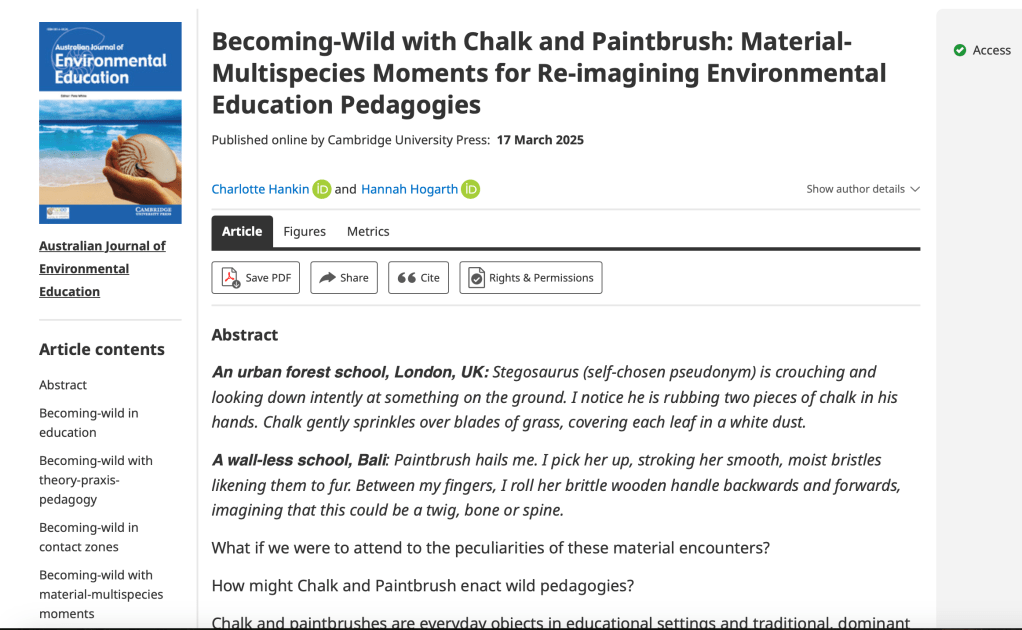
Publication: Cambridge University Press
Publication Date: March 2025
Author: Charlotte Hankin and Hannah Hogarth
s
aa
An urban forest school, London, UK: Stegosaurus (self-chosen pseudonym) is crouching and looking down intently at something on the ground. I notice he is rubbing two pieces of chalk in his hands. Chalk gently sprinkles over blades of grass, covering each leaf in a white dust.
Chalk and paintbrushes are everyday objects in educational settings and traditional, dominant pedagogies focus on how humans use these objects to support learning. Drawing on two material-multispecies moments from our posthumanist, feminist, materialist inquiries, we think-with rather than about Chalk and Paintbrush as intra-acting, co-creators of knowledge. These provide ways for becoming-wild that resist the anthropocentric, developmental and civilising processes so deeply imbued in educational approaches. Instead, becoming-wild offers hopeful and generative wild pedagogies that acknowledge the power of the everyday, ignored and divergent that strengthen and expand all our response-abilities.
What if we were to attend to the peculiarities of these material encounters?
Mess-making as a Force for Resistance: Reimagining Environmental Educational Research for Multispecies Flourishing
Flourishing
En
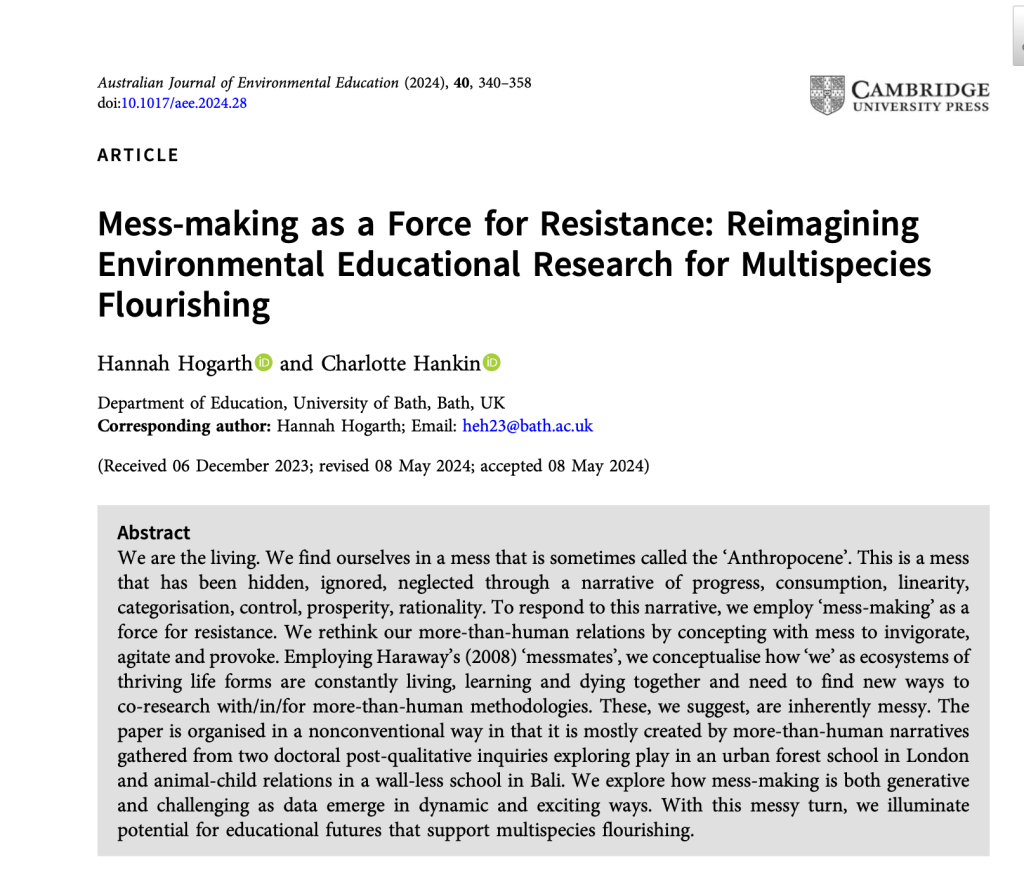
Publication: Australian Journal of Environmental Education
Publication Date: Sept 2004
Author: Hannah Hogarth & Charlotte Hankin
s
aa
We explore how mess-making is both generative and challenging as data emerge in dynamic and exciting ways. With this messy turn, we illuminate potential for educational futures that support multispecies flourishing.
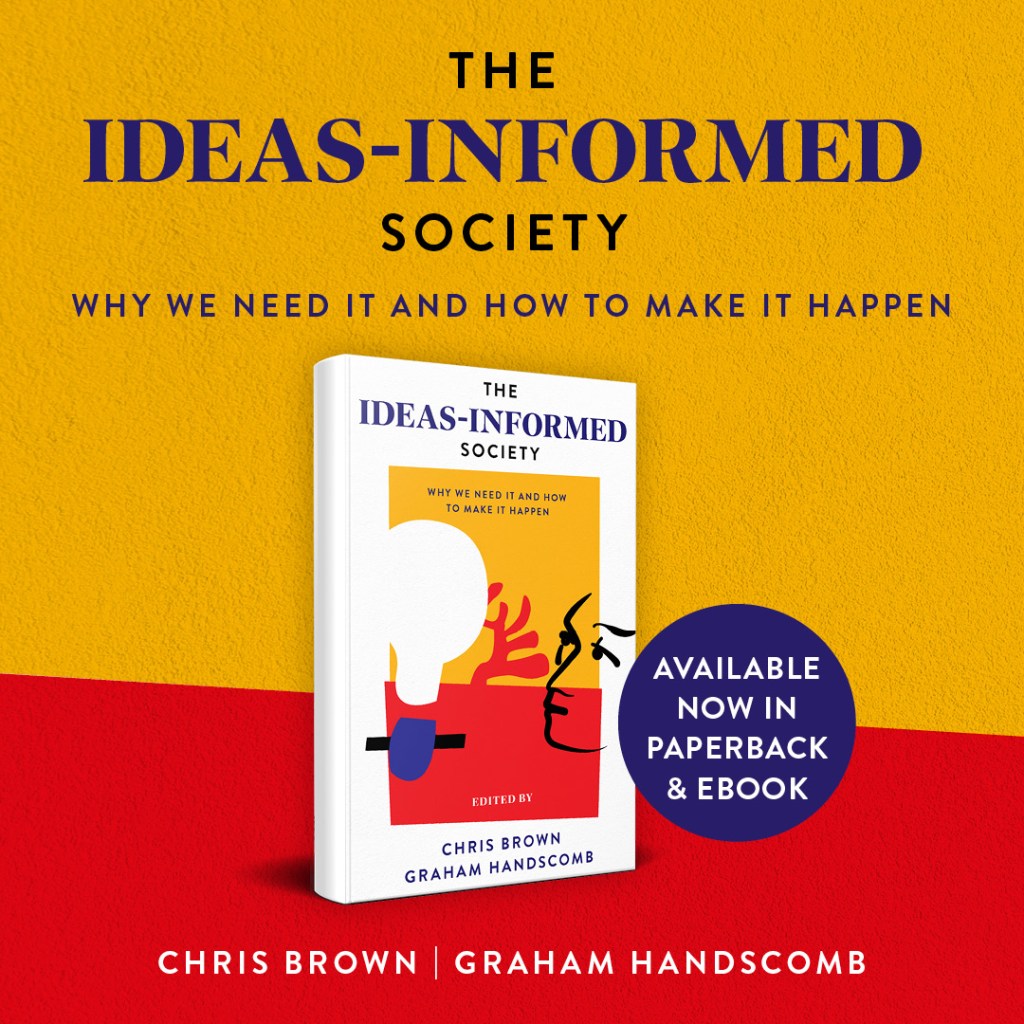
Publication: Emerald Publishing Ltd.
Publication Date: Sept 2023
Author: Benjamin Freud, Ph.D. & Charlotte Hankin
s
aa
Democratic societies thrive when citizens actively and critically engage with new ideas, developments and claims to truth. Not only can such practices result in more effective choice-making, but they can also lead to widespread support for progressive beliefs, such as social justice. With Western societies in the midst of environmental, social and political crises, it seems more pertinent than ever that citizens become ‘ideas-informed’.
Presenting concepts from academia, industry, and practice, The Ideas-Informed Society closes the gap between the ideal of the ideas-informed society and the current reality. By exploring what it means to be ideas-informed and the benefits for both individuals and society, the chapters conceive what an ideal ideas-informed society would look like, what are the key ingredients of an ideas-informed society, and how to make it happen.
This paper illuminates the ethical entanglements that emerged/ are emerging/ might emerge with nonhumans (including multi-species others and the material world) during and throughout doctoral research processes. As education doctoral students with shared concerns about educating in the Anthropocene, we are hope-ful that posthuman, feminist new materialist philosophies can offer new ways to the environmental crises. We share our struggles and joys in enacting lively, relational ontologies, inspired by the work of Barad and Haraway. This paper share stories from our doctoral research to explore ethical entanglements: ‘Centipede and Wonderboy’ tells of a research event that emerged in the urban forest school where Hannah, the children and nonhuman nature are exploring the possibilities of play. Charlotte explores how animal-human stories are constituted through ‘multispecies moments’ in an international school. We consider the agentic nature of doctoral ethical procedures and the anthropocentrism they give force to. We end by reimagining a posthuman ethics where nonhumans are acknowledged and included at every stage of the research process in a generative, dynamic intra-play of situated, entangled engagements.
Publication: SOJOURN: Journal of Social Issues in Southeast Asia
Publication Date: Volume 29, Number 1, March 2014
Author: Benjamin Freud, Ph.D.
Cut off from the metropole and coerced into trade with Japan, The French administration in Indochina under Governor General Jean Decoux had to find ingenious ways to produce locally what it had been accustomed to importing. Through the creating of a substitution economy, the nurturing of the artisanat, and appeals to Indochinese solidarity, Decoux designed policies to minimize the impact of Indochina’s isolation and exalt the benefits of French tutelage, as part of a final effort to convince the peoples of Indochina that French civilization could drive either societies forward—an approach founded on linearity that in itself reveals much about the colonial mind.
 Coconut Thinking