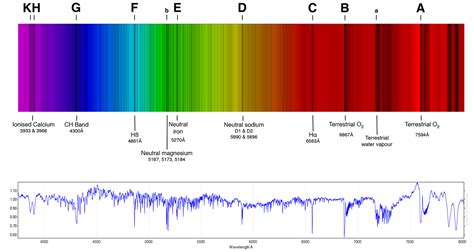
I like to imagine an instrument which would enable us to break up patterns of social behavior as the physicist breaks up a beam of rays. Looking through this sociological spectroscope we would see spread out under the diffraction grating the rainbow-colored spectrum of all possible human attitudes to life. The whole distressing muddle would become neat, clear and comprehensive.
These words were written by Arthur Koestler over 80 years ago in his essay “The Yogi and the Commissar.” Koestler describes how on the infra-red end of the spectrum stands the commissar, who believes in change from without, who affirms that all the ills of humankind will be cured by Revolution. The commissar is brutal and unforgiving, with complete faith that state policies will change human behavior and alter socio-economic conditions so that communism might prevail. With the ends justifying the use of all means, the commissar is like the cosmic watchmaker, who manipulates a mechanical world.
On the other end of the spectrum, ultra-violet, sits the yogi, who believes that improvements can only be attained through personal effort from within. He sees each individual as free yet attached to the whole through a cosmic umbilical cord that feeds him with spiritual nourishment. His only task in the world is to care for that umbilical cord as it extends and splits off to feed the bodies of all living things. The Yogi also seeks Truth, but since the ends are unpredictable, only the means count.
Koestler pointed his spectroscope at humanity in the years following his lost illusions in communism and the Left’s defeat. With more than a quarter of the 21st century behind us, if we dusted off the same spectrometer and pointed it at the sustainability and regenerative movements, I am convinced we would find the same spread of attitudes to life. At one end the measurer, at the other the same yogi still sitting on his zafu, but now we call him the integrator.
The measurer is not the commissar. His authority isn’t backed up by gulags and he rarely seeks to snuff out disloyalty with the same political zeal. The measurer, however does try to bring on sustainable utopias through statistics and balance sheets, trend lines and surveys, and any other data sets that makes transition to greener modes of production and consumption. He believes incentives (and punishments) matter, considering pocket books and ROIs as the most effective means to change behaviors. Sometimes this might mean offsets, often times it’s about finding that optimal point on the graph that shows how sustainable practices will pay off.
The measurer places hope for humanity in technology, next year’s discovery, the one that promises to solve the planet’s wicked problems. Technology is the mark of progress and we can progress our way out of climate breakdown. The measurer sees in curves and histograms: exponential, jagged, and trending. It’s the logic of deus in machina that will save us from this modern tragedy. The immanence of godliness in technology will not let the story turn out badly. That’s why the measurer is so excited about investment in green capital: the more money we input, the sooner we can output the magic bullet. Technology will see to it that industry reduces carbon emissions or even captures them, and it will make the products we buy all that much more recyclable. We won’t need to change our standards of living much thanks to renewable energy.
The measurer sees and plans in numbers: zero, 7/9, 1.5, 2.0,17, 30%, 250, 450, 2030, 2050, 1 million, 100 billion/year. These become universal socio-economic goals that don’t account for asymmetries. For the measurer, numbers matter because they are legible, they galvanize through clarity. Numbers also give us indicators—objective ones at that—about how much progress we are making. This is why net positive is so important to the measurer. The measurer gets to decide what falls under debits and what falls under credits, which makes the job a lot easier. Allocation appears objective once the metrics are set. The measurer is in this position thanks to the very systemic structures that created the measurer’s very job.
The measurer knows how important it is to teach about sustainability he writes curriculum for schools. These seldom enter the core curriculum beyond a box or chapter in a textbook. What mattered then still matters now. He cannot says his curriculum is important, but can never compete with English and Math, which continue to be the core of the school’s academic program. When they do touch upon sustainability, students sit in classrooms learning about the natural world and when they are taken outside, the nature becomes a field trip before returning indoors for where the real learning happens.
The integrator has a different dilemma. His attempts to produce change from withindon’t seem to work either. The integrator evokes the need for inner work and adopting alternate ways of knowing. The integrator calls the current system extractive and understands that different epistemologies would unfetter us from neoliberal cycles. The integrator refers to ancient wisdoms and seeks to break away from Western intellectual tradition. He speaks about shifting paradigms, posts about how the old system is collapsing or needs hospicing, and talks about power most when it’s far from his home.
The integrator places hope in the web of life. The integrator believes we are all connected. He speaks of entanglements. The integrator feels we are disconnected and need eschew our modernist ways. This involves moving away from separation, reconciling the Cartesian split, and engaging with non-Western discourse. The integrator believes once humanity shifts paradigms—the new will have to include ancient wisdoms—it will find harmony and appreciate our interbeing. The integrator gathers those who already share his language, mistaking echo for momentum. The integrator identifies with those who have read the same books and share the same phrasings. This is how the integrator recognizes other integrators.
The integrator is not a planner, the integrator lets the journey take him where it will. Like the measurer, the integrator believes that a move toward renewable energy is important and once consumers realize what is at stake, the new homo enviro-economicus can make wise choices: buy an EV, shop organic, don’t fly unless you have to. These choices, at scale, will alter our civilizational path. The integrator professes love for the more-than-human world, though that love does not necessarily constrict lifestyle.
The integrator points the finger at the industrial model of education. The integrator is concerned with well-being and writes curriculum that will help each young person be the best version of themselves, because well-being is endemic. He wants to bring regeneration and indigenous knowledge to state schools to break the cycle of modernity. This might replace aspects of curriculum coverage, but would continue to be taught through a system of knowledge codification that assesses individuals through exams and recognizes degrees over situated understandings. The integrator tries to change the language without abandoning the reward structure. The integrator does’t teach in a classroom, but he does visit them.
The measurer and the integrator seldom bump into each other though they operate in the same rooms. The measurer receives his salary from corporations that promise growth to investors, funds that meet with governments at summits, or schools that promise career-readiness. The integrator is invited by the same companies to host circles on transformation and relational leadership. The measurer creates powerpoint for student lectures on monocrops and carbon emissions and aligns all his lessons to the SDGs, the integrator creates powerpoint for student lectures on monocrops and carbon emissions and aligns all his lessons to the IDGs. The measurer determines impact on spreadsheets, the integrator on the calendar of speaking engagements.
Neither asks who funds the summit, who owns the land beneath the solar farm, who profits from the patents on the green technologies, or who decides what counts as knowledge in the classroom. Power calibrates the same machine that makes the measurer’s metrics and the integrator’s retreats legible.
Whether we point the spectroscope at humanity, the sustainability movement, or any other transformative endeavor matters little.
If we turned it on ourselves, we would see the same spectrum. I do.
Even my refusal of it appears in the colors it diffracts.
No instrument is neutral. Someone has constructed it to serve a purpose. It does not merely sort us into infra-red and ultra-violet; it decides the spectrum within which transformation can be visible at all.
 Coconut Thinking