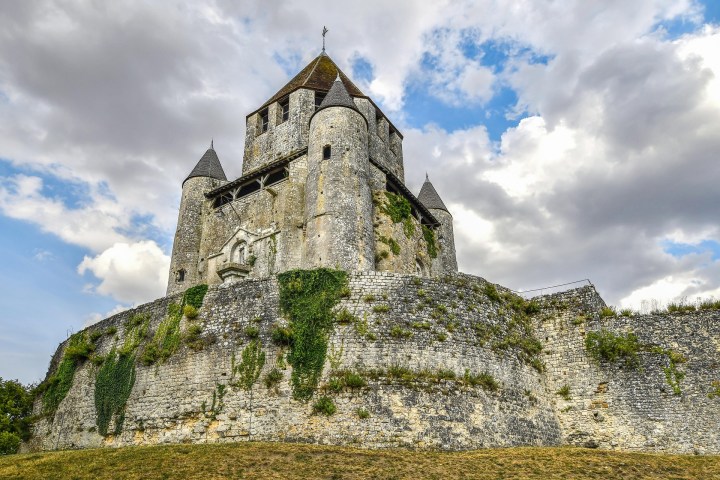
Lately, as artificial intelligence rapidly reshapes our world, there’s a growing chorus urging us to protect and celebrate what makes us uniquely human. We hear calls to huddle inside some metaphorical fortress, defining ourselves by a laundry list of traits: creativity, emotional connection, love; everything AI supposedly can’t replicate. But in doing so, we risk echoing an older, more troubling pattern. The fortress exists to manage killability, deciding who may live and who may die.
Historically, defining “what makes us human” has been a tool of exclusion wielded by those in power. Just as nations once drew (and still do) lines around identity to protect a “pure” national character from outside threats, we’re seeing a similar impulse now. Regardless of intent, those who define “the human” exercise power to exclude. They hold the symbolic capital to decide what humanity looks like. What isn’t named? What’s the cost of buying a ticket into the fortress?
One brutal difference between “human” and “animal,” as Derrida reminds us, is this: animals are those who can be killed with impunity. The fortress of humanity protects not life, but the distribution of killability. By embracing our animality until it dissolves, we resist the capitalist logic that decides who lives and who dies. We dismantle from the inside a system that commodifies life, that destroys life, that wields the power of decision. We resist, no, we re-sit, by recognizing that we are part of the same living world, that we world these worlds with all our kin. When the category dissolves, so does the need for defense, and what remains is movement.
Living systems breathe through porous membranes. Life happens in the traffic across the edge: exchange, transformation, mutual becoming without equivalence. Seal the membrane off and the flow dies; the wall kills what it means to protect. This is an illusion anyway. Technology breathes through us already. We’re not purely human in any isolated sense; we live a constantly evolving cyborg existence. The fantasy of a stable, exclusive set of “human” traits just reinscribes power, a new version of an old game where a dominant class decides who counts as fully human and who doesn’t.
The same is true of attempts to “protect” cultures. Every act of protection rebuilds the fortress. But life doesn’t work that way. We are part of an ecosystem, and our so-called human traits are not a fortress; they’re an exclusionary boundary.
What if, instead of fortifying “the human,” we embraced our animality, the other side of the human/animal duality? To do so, rather than separating ourselves from the living world by huddling around human-centric designs, we could acknowledge a deep kinship with all forms of life. Kinship isn’t inclusion, it’s co-exposure, it’s becoming together through life and death.
Once we embrace our animality, we can step out of it. Once we become animal again, we shed the category born of duality and oppression. We start as animals, and end as life. Our animality dissolves animality itself.
The challenge isn’t to defend a static idea of “the human,” but to recognize that we are part of a dynamic, interrelational world. To embrace our animality is to step outside its category.
 Coconut Thinking