
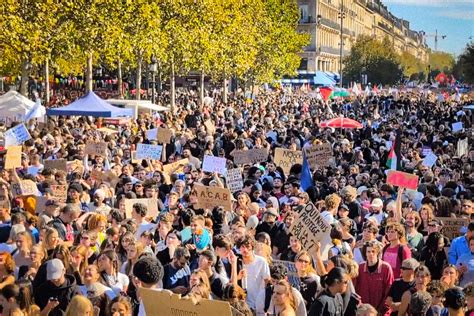
You have to admire these high school students. It takes courage and determination when faced with adversity. Their demands are concrete, but I’d argue their frustration stems from class elitism, an elitism that goes beyond wealth: it’s about how we accrue cultural and symbolic power through our institutions. The Republican school system makes this visible, but it is hardly unique to France. Bourdieu and Passeron showed as much in La Reproduction in 1970: for all its meritocratic promise, the Republican school system reproduces class through cultural capital.
I’m impressed by how young people and adults are coming together, organized and intergenerational, to question how the education system perpetuates socioeconomic status and class.
Class is more than wealth: it shapes and is shaped by the cultural and symbolic capital we accrue, the possibilities that are open for some and not others. Gender, race and wealth play a part, but they are only part of the matter. Elitism is how those possibilities are kept for some. It is, at least in one of its aspects, about how we trade in cultural and symbolic capital, which isn’t necessarily correlated with our material and financial assets, though often it is.
Unreplaced teachers, overcrowded classrooms and derelict buildings are real problems, and they are felt most in socioeconomically disadvantaged areas of the country. Beneath them is a system that pressures young people into compliance and competition to access certain rungs of the socio-economic and cultural ladder, rungs that stay closed to the non-elite and preserve the position of the elite.
I’m not condoning violence. What I admire is the peaceful side of this movement and the incredible maturity these students are showing. There has been violence, yes, from a small minority of the hundreds of thousands who have marched, and people have been hurt on both sides.
Yet much of the press focuses on violence rather than on the demands. That episodic framing, and the fear-mongering around it, misdirects demands for very real structural and systemic change. That too is how the elite maintains itself.
That these students are conscious of their position, and willing and able to take to the street, shows that there are still ways to express ourselves politically and non-violently. It keeps spaces open for dialogue, through and as demonstrations. I hope it is met with authentic openness, government included, and not closed off by manoeuvrers from the elites to preserve their positions.
This discussion must continue, and it isn’t complete. It is also an invitation for many of us to consider our positionality as the recursive shaping and re-shaping of class structures, through how we accrue and trade in cultural and symbolic capital. Most of us reading this are complicit.
We must ask ourselves whether we are in solidarity with these students, and whether, beyond showing support, we are willing to dismantle the mechanisms of elitism through which we accrue and exchange that capital.
Words aren’t enough, whatever we say, proclaim, or post. Solidarity means creating the conditions to dismantle this, and being willing to lose, to shift socioeconomic hierarchies that might endanger our own position. That question is mine too, as someone who leads a school.
References
- Bourdieu, P. & Passeron, J.-C. (1970). La Reproduction : éléments pour une théorie du système d’enseignement. Paris : Éditions de Minuit.
- AFP, via Les Nouvelles Calédoniennes (6 octobre 2026). Mobilisation lycéenne sous haute surveillance
- Public Sénat (octobre 2026). « On est tous dans le même bateau » : quand enseignants et syndicats rejoignent la mobilisation lycéenne
- Euronews (6 octobre 2026). Mobilisation lycéenne acte III : 891 lycées perturbés
- AFP, via Kuwait Times (6 October 2026). ‘No future’: Thousands mass in France for high school protests
- Ground News (October 2026). Students and teachers march in France on biggest day of high school protests

