This article was published in an abridged form in Getting Smart on 14 June 2023.
It was also published on Intrepid Ed News on 5 July 2023.
I’m not getting myself all worked up over how generative AI is going to revolutionize the world of education. I’m not spending too much time trying to find my bearings and make sense of this new world we entered since OpenAI’s successful promotion strategy of ChatGPT. AI didn’t emerge out of nowhere on November 30, 2022. We could all see this coming when IBM’s Watson outperformed two former Jeopardy champions1, demonstrating the superior information retrieval capabilities of a fast processor and large memory bank compared to the human brain. This false comparison is one we often hear, and it’s no wonder we feel uneasy about AI. We tend to view the brain as one big computer, overlooking its organic, emergent network. We fear becoming obsolete.
In response, we build walls to protect ourselves, afraid that AI will take our jobs, send us hurling into uncertainty, enslave us all in its relentless quest to purchase cheaper paperclips. We call out to celebrate (reclaim?) the attributes that supposedly make us human, uniquely human. You can pick out of a hat which attributes you want to defend, it really doesn’t matter. We build walls, the human-centered design of fortifications that will keep us safe from the AI onslaught. These walls aren’t cocoons for our metamorphosis or the nourishing placenta of our re-birth. No. These walls are built to preserve, capture, perhaps even fossilize what makes us uniquely human. Let’s celebrate that because AI is a threat to everything that doesn’t make humans stand out.
Behind these walls, we are erecting monuments to our human exceptionalism. We gather around these monuments to worship our own image, gods looking over the world, able to extract anywhere inside the trophic pyramid. “God is dead, long live the gods,” is more accurate than Nietzsche’s original quip. We believe we have the right, nay the duty, to ignore the laws of Nature so that we may write our own. We are humans, essentially unique and superior among all.
Reclaiming what makes us uniquely human is the same treacherous game we’ve been playing all along. It is a game of separation and domination, extraction, and extinction. The walls we build aren’t protecting us from AI’s Trojan Horse; instead, they exclude the natural world. As we dance around the monuments to our human exceptionalism, we disconnect ourselves from other forms of life, celebrating how we are separate and different, how we dictate our own laws.
AI won’t revolutionize education. ChatGPT might change how we do things, but it does not change why we do things. We continue to place value on competition, wealth-creation, hierarchization, and meritocracy. ChatGPT has only spotlighted existing concerns in education (as had YouTube before). We ask ourselves what “the future of education” will be, ignoring that education is but one part of the greater systemic whole and that the latter is too resilient and empire-oriented to permit any changes to education that will threaten it. The futures of education is enveloped in the story of the whole.
The story of the whole is more than the story of our society, our systems, our ways of living. The story of the whole is the story of human non-exceptionalism. It is not the story of how we act on the world, but how we respond as the world. It is the story of our relationships as the natural world, our entanglement [with/as] everything in the universe, our fluidity as impermanent entities. It is a story told through many voices, including more than human. It is a story that finds credibility in ancient wisdoms and quantum physics, as if we needed credible sources to reconnect us to life.
Those walls that we are building are the same walls intended to shield us from climate change. We fear that rising temperatures will jeopardize our way of life, and if we could find a way to “develop sustainably,” to keep expanding so long as we’re carbon-neutral, we would. Keep paving! Climate change is also the story of human exceptionalism, where we seek ways to preserve our civilization. It is not about climate change! It is about ecological breakdown and the Sixth Mass extinction of our non-human kin. It is about the loss of the biodiversity in the ecosystem(s) that allows all life to thrive. Climate change is just one of the accelerators of this breakdown
So let us tell the story of the whole, of our entanglement as the world. This is a new story that we can enact. Through this enactment, we can create a new culture and a new set of values for these liminal times..
Let us tell this story with voices from education, from schools, from learners, for it is a story of many voices interwoven within its narrative. This is no longer the story of competition, individualization, and separation. This is the story of coming together, of sharing, and of contributing to the whole.
What would it take to write this new story in our schools today? What would it take to enact this story? Schools are organized within specific configurations of space and time. These configurations can be reconfigured.
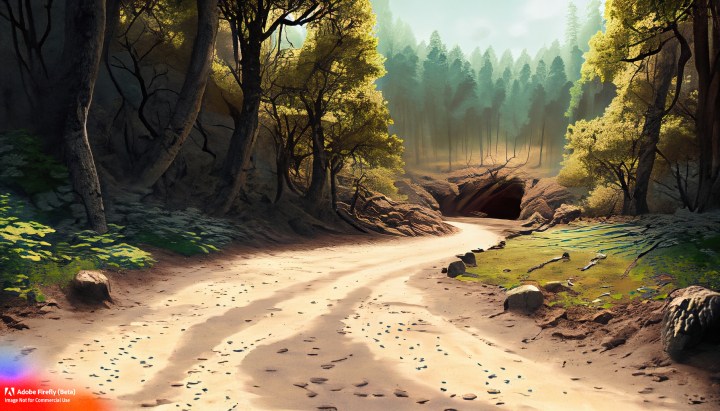
Perhaps there is a modern twist of the allegory of the cave that applies to school. Rather than prisoners mistaking shadows on the wall for reality, schools are fully aware that there is a vibrant world outside the cave. According to this myth, the purpose of school is to prepare students for that world, the real world. For 12 years, young people are filled with knowledge and facts and skills, and documentation “proving” just how full of knowledge and facts and skills they are. Schools aim to get kids ready for the real world outside the cave, this magical place that awaits them. So you better be ready! We can’t send you off unprepared! Fill in those skills gaps! Make sure you get support when you aren’t achieving! (or is it you’re just lazy?). We can’t send the kids out if they’re not ready. No child left behind and all. It’s not race to the top, it’s race to get out. And every society has its school cave, not realizing that once you’re out, there are no walls. But then, there never were any.
Still we cling on to this falsity. We can’t just let the kids leave the cave without subjecting them to all kinds of checks and tests. We have to make sure that there is quality assurance. We have to make sure that the product is good enough for release2. Each one inspected and re-inspected and then let out with the piece of paper that says “passed.” Some kids won’t get that piece of paper though, but they can’t stay in the cave. After a while you have to let them out in the real world, and their chances aren’t very good out there, not if they didn’t pass inspection. Ho hum, they should have tried harder.
If there is a real world, then it must mean there is an artificial world, and school must be the artificial world. How dare we suggest that kids live in an artificial world? Kids live in their world and it’s real, full of hopes, fears, joys, dramas, transformations, and setbacks.
In truth, there is no cave. People of all ages learn all the time, everywhere and under surprising circumstances. We reconfigure the spacetime of learning by dispelling the cave. Now, we stand under the vast blue sky, together, and we can start our journey, together. In which direction shall we head?
Will we walk together?
That is the fundamental question of these liminal times.
What would it take to write this new story in our schools today? What would it take to enact this story? It would take us walking together. We don’t have to notice the same marks in the landscape as we head toward the horizon. We don’t have to walk single file. We don’t even have to draw the same maps. But we must walk together. And when we look around, we see that on this walk together, means all life together: human, non-human, and more than human. Humans are no exception. When we walk together, we look out for one another, for all life. That is the new story. We may not always get it right – surprises will await us – yet we set out with our moral compass.
We become a collective, a bio-collective. A collective doesn’t mean we are all the same. It means that we are all together, not separated, celebrating all of our diversities coming together In the words of Bruno Latour, “all, but not two.”
Imagine schools as places where we learn through contribution to all life. Not places where we are inspected for our knowledge and facts and skills, so that in the end we get our piece of paper that tells the “real” world that we’ve been quality assured. No, all of us contributing to all of us, all life.
Imagine success no longer determined by individual assessments or grades. Rather, success measured by the contributions made to the thriving of the bio-collective. I am because you are, I succeed because you succeed, I thrive because you thrive.
These might sound like big, utopian ideas, but this is a time to come together around hope not despair, kinship not exceptionalism, courage not cynicism.
This is the horizon toward which we head. I’m not suggesting it’s where we need to be now. I’m not providing a map of how to get there either. I’m asking what would it take for that first step? I’m asking how we can dispel the cave, not to build more walls and monuments to preserve and glorify our human exceptionalism, rather to embark on a journey leaving behind those spaces where we have done so much damage to the earth, biodiversity, and each other. What would it take for that first step?
Perhaps the first step toward having schools bring together the collective is for schools to treat learners as members of a collective. No longer individualizing, quality checking each product along every stage of what the school churns out, of what the school wants its typical graduate. You’ve heard how individualized assessments are seldom reflections of learning or meaning-making. You know the deal when it comes to the stress we cause kids when we demand that they compete with one another for who has the highest GPA. I don’t need to tell you about how young people are increasingly disengaged (though some mistake engagement with compliance). I wonder whether it’s because they know they can learn what they want, when they want from YouTube rather than what they’re fed every day (COVID was the first time in history when students could press mute on their teachers). So why are we still sticking to this story of separation, not just between students, but between school and the real world, as if we could excuse what goes on in schools because it’s not the real world?
Let’s tell a different story, one where schools aren’t a closed system, where learners of all ages work together to nurture thriving communities—however defined and more than human. Where success criteria are simply measures of the positive contributions the learner-doers make (not in a utilitarian way, though part of the process will have to be the understanding that some members of the community might be negatively impacted). It’s not “show what you know,” it’s “how have you contributed to the community, as a member of the community?” It becomes about the marks we leave on the world, as the world.
This doesn’t mean we let go of “traditional learning” or assessments. Instead, we reconceptualize them. For instance, we write narrative texts and our success is based on how much we moved the thinking and the feeling of our targeted readers. Not whether we use the right transition phrases or enough literary devices. We build bird boxes of locally and renewably grown wood and our success is measured quantitatively and qualitatively by how it blends into the landscape, how effectively it serves as a domicile for our avian friends, how easily the materials can re-enter the circular economy. Not in terms of whether we have written process journals. We learn physics so that we may build a sculpture to beautify the campus. Not so that we can use pen and paper to calculate the speed of a sled immediately before a random girl in a picture jumps off a snow ramp. And we often do this together, not individually.
We tell the story of contribution to the collective. That is the assessment for, as, and of learning-doing.
This isn’t so difficult to imagine. Isn’t this what happens at your workplace, in your home, with your social relations? Sure, the emphasis may not be on contribution to the collective as such, but you determine your success on the mark you have left: sales based on consumer demand; reduced use of automobile traffic in favor of bicycles thanks to redesigned bike lanes; a sense of higher quality of life after the implementation of a well-being program. Put simply, no one assesses Amanda Gorman on how she blends language, rhythm, and themes in her poetry (or her use of assonance, enjambment, or anaphora!). We are moved by The Hill We Climb through the affect she creates. We study how she blends language, rhythm, and themes so that we can learn from her work and develop our own styles that create affect and move our audience. That is the only thing that matters3.
What would it take to write this new story in our schools today? It would take learning-doing that contributes to the bio-collective, acknowledging the marks we leave on the world. as the world. It means understanding that we never achieve things as individuals because we are never separated from the collective. It doesn’t mean that we don’t support one another individually as members of the collective: each child receiving the care they need to thrive. It means that we work together.
When the godfathers of AI are warning us that AI poses a threat to humanity, this is not the time to build walls to protect ourselves from the onslaught because those who are creating the supposed enemy are already within (they’re humans, after all). This is not the time to let the storm gather outside as we hide behind our human exceptionalism. This is not the time to separate ourselves from the world as 150 to 200 species of plants, insects, birds, and mammals go extinct every day, according to the International Union for Conservation of Nature (IUCN).
This is the time to come together as a collective, a bio-collective. Instead of walling ourselves off, let’s set limits on that which prevents life from thriving: destructive AI, extractive production, thoughtless consumption, and avoidable transportation. Let’s constantly strive to tighten those limits.
No, this isn’t easy because it hasn’t been easy thus far. Yet there are steps we can take today in schools and for some, small steps are big steps.
That step might be creating learning experiences where we come together as learner-doers, as a collective, for the collective, and our success measured qualitatively and quantitatively based on how we help the collective of all life—the bio-collective—thrive.
In concrete terms, maybe that means bringing together the voices of the community and working together, with a common purpose through a project. No grades, no individual assessment. Success depending on whether life thrives. The collective contributing to the collective. Nurturing a sense of commonality rather than separation.
Why would we do anything that is contrary to this?
1 Or Big Blue defeating Kasparov.
2 That said, there are safeguards in place for child protection, and this is a whole other conversation about systems… needless to add that the protection and care of children is of foremost importance and that I am referring to academic assessments.
3 This also recognizes that nothing exists independently because affect is created relationally: it depends on your circumstances and how the past plays itself on the present. If you’re not in the mood, there is very little I can do. Tomorrow, you may be more receptive. The work itself does not stand independent of the context or the pre-existing context.
 Coconut Thinking